
Ladder Logic Isn’t as Hard as You Think
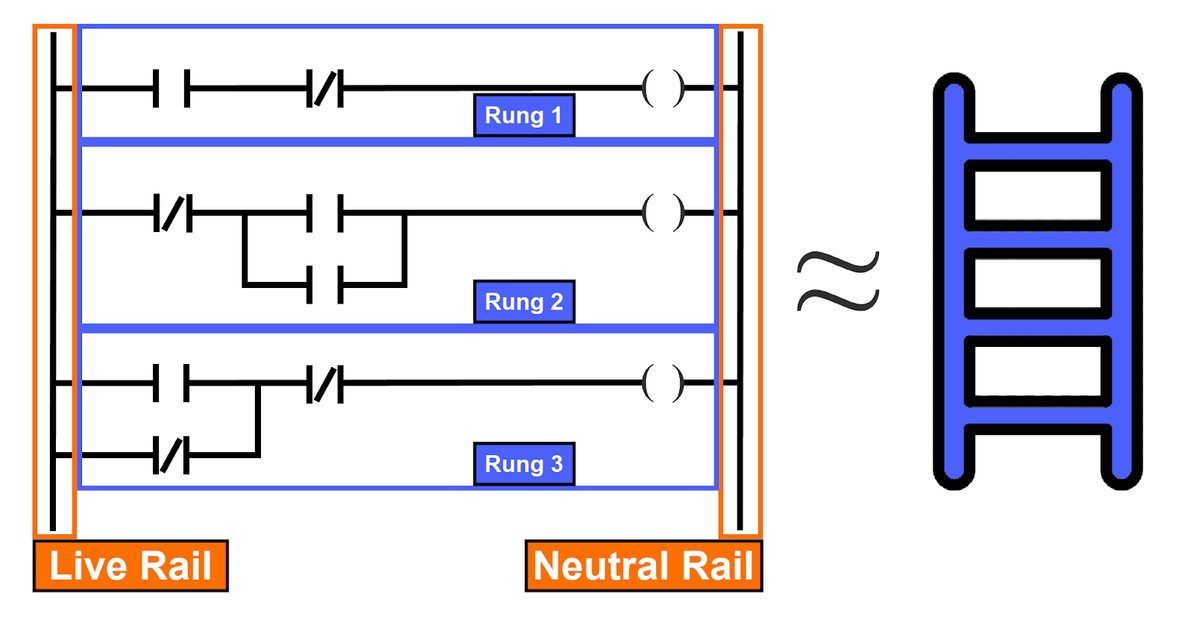
Ladder logic is a diagram-based programming language commonly used in PLC systems. If you’ve only worked with traditional programming languages like C or BASIC, ladder logic can feel unfamiliar—and honestly, a bit intimidating at first. Because of that, many people give up before they even start. But here’s a fun fact most people don’t realize: You already learned ladder logic back in middle school.
A Circuit You Already Understand
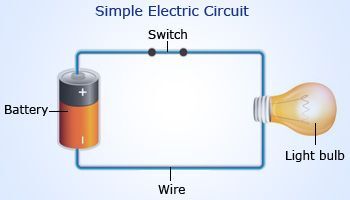
Think about the most basic electrical circuit:
- A switch
- A light bulb
When you press the switch, the light turns on. No mystery there—everyone understands this.
Now imagine expressing that same idea using symbols instead of a physical drawing.
- A switch
- A light bulb
When you press the switch, the light turns on. No mystery there—everyone understands this.
Now imagine expressing that same idea using symbols instead of a physical drawing.
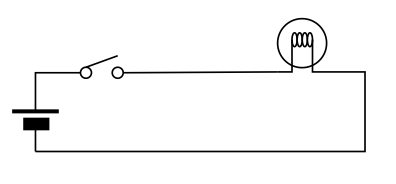
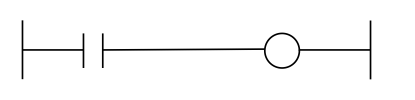
Then imagine simplifying it even further by removing the power supply symbol and focusing only on the logic of the connection.
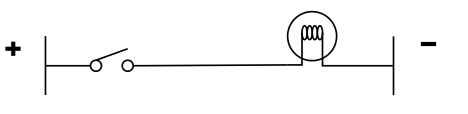
What you end up with looks very familiar to anyone who has seen ladder logic. That’s because ladder logic is essentially a simplified electrical circuit diagram:
- The switch becomes a logical input
- The lamp becomes an output
- The “flow” represents whether current (logic) can pass or not
Nothing magical is happening.
So What Is Ladder Logic?
Ladder logic is simply:
- Electrical circuit concepts
- Drawn in a clean, symbolic form
- Without explicitly showing the power source
In other words, it’s the same logic you already know—just written visually.
- Electrical circuit concepts
- Drawn in a clean, symbolic form
- Without explicitly showing the power source
In other words, it’s the same logic you already know—just written visually.
Once you understand this, ladder logic stops feeling like a foreign language and starts feeling… familiar.
From Simple to Complex (Just Like Programming)
Of course, real systems aren’t just one switch and one lamp.
By combining multiple elements—contacts, coils, timers, counters—you can build very complex control logic.
But the core principle never changes.
This is no different from writing software:
- You start with simple ideas
- Then combine if, then, for, and next
- Until the program becomes large and sophisticated
Ladder logic works exactly the same way—just visually instead of textually.
By combining multiple elements—contacts, coils, timers, counters—you can build very complex control logic.
But the core principle never changes.
This is no different from writing software:
- You start with simple ideas
- Then combine if, then, for, and next
- Until the program becomes large and sophisticated
Ladder logic works exactly the same way—just visually instead of textually.
A Real Example from a CUBLOC User
Below is part of a ladder logic program sent to us by one of our CUBLOC customers.
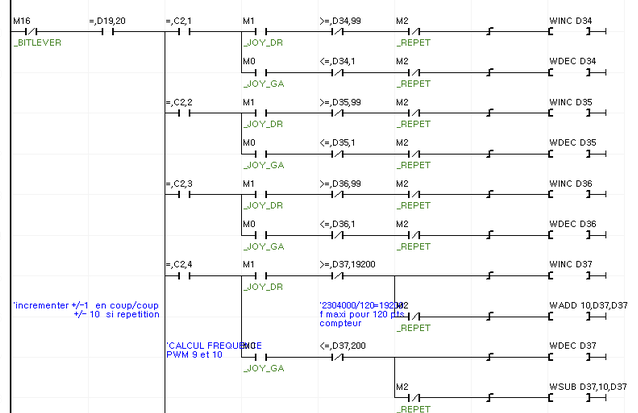
At first glance, it looks extremely complex. But if you break it down using the simple rules we discussed above, you’ll find that:
- Every rung follows the same basic logic
- Every decision is just an on/off condition
- Every output is the result of those conditions
Once you understand the foundation, even large ladder logic programs become readable.
Final Thoughts
Ladder logic isn’t difficult—it’s familiar.
If you understand basic electrical circuits, you already understand the heart of ladder logic. The only challenge is getting past the psychological barrier and realizing that this is something you’ve known all along.
So don’t be afraid of ladder logic. You’ve been practicing it since school—you just didn’t call it that back then. ?
If you understand basic electrical circuits, you already understand the heart of ladder logic. The only challenge is getting past the psychological barrier and realizing that this is something you’ve known all along.
So don’t be afraid of ladder logic. You’ve been practicing it since school—you just didn’t call it that back then. ?
Jan 29th 2026
Recent Posts
-

24/7 Real-Time Technical Support: Launching Our AI Assistant Service!
Hello, this is Comfile Technology. At Comfile Technology, we have always strived to provide the fa …Feb 24th 2026 -
CPi Panel PC Lite Models are Upgrading to 32GB SD Cards
The standard SD card capacity for CPi Panel PC (Lite models) is being upgraded from 8GB to 32GB. Mov …Feb 7th 2026 -
Introducing the New CFNET Field I/O
We are pleased to introduce our new CFNET Field I/O product. This product has been in development f …Jan 31st 2026